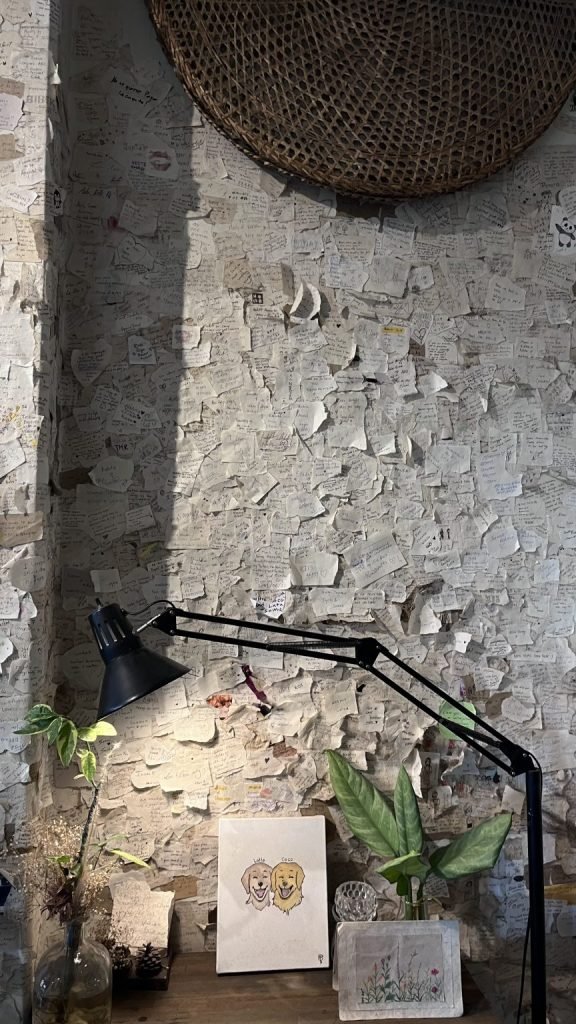
In this guide
You will need
- A desk lamp you can move and angle
- A piece of work in progress, such as a drawing or a print block
- A scrap of plain white paper
- A notebook to record what you changed
The end of the day changes the light on a desk faster than most people notice. For a while window light and lamplight mix; after that the lamp is all there is. This guide is a routine for that change.
Put the lamp to one side
Light from straight in front flattens a drawing and throws glare off paper and wet ink. Place the lamp on the side opposite your drawing hand, so your hand does not shade the line you are making, and low enough that the light rakes across the surface.
Notice the mixed half hour
While there is still daylight at the window, the two sources disagree: the window is cool, the lamp is warm. Colors judged in that half hour often look wrong the next morning. Use it for line work and leave color decisions for later.
Check color against white
Keep the scrap of white paper beside the work. If it looks yellow under the lamp, so will everything else. Judge color against the scrap rather than against your memory of daylight.
Know when to stop
Late-evening mistakes are predictable: lines drawn heavier than you meant, and dark areas that look lighter than they are. When you catch one, write it down and stop for the day. Look at the same work again in the morning and add a line about what changed.