You will need
- Three photographs you plan to share
- The field notes you wrote when you made them
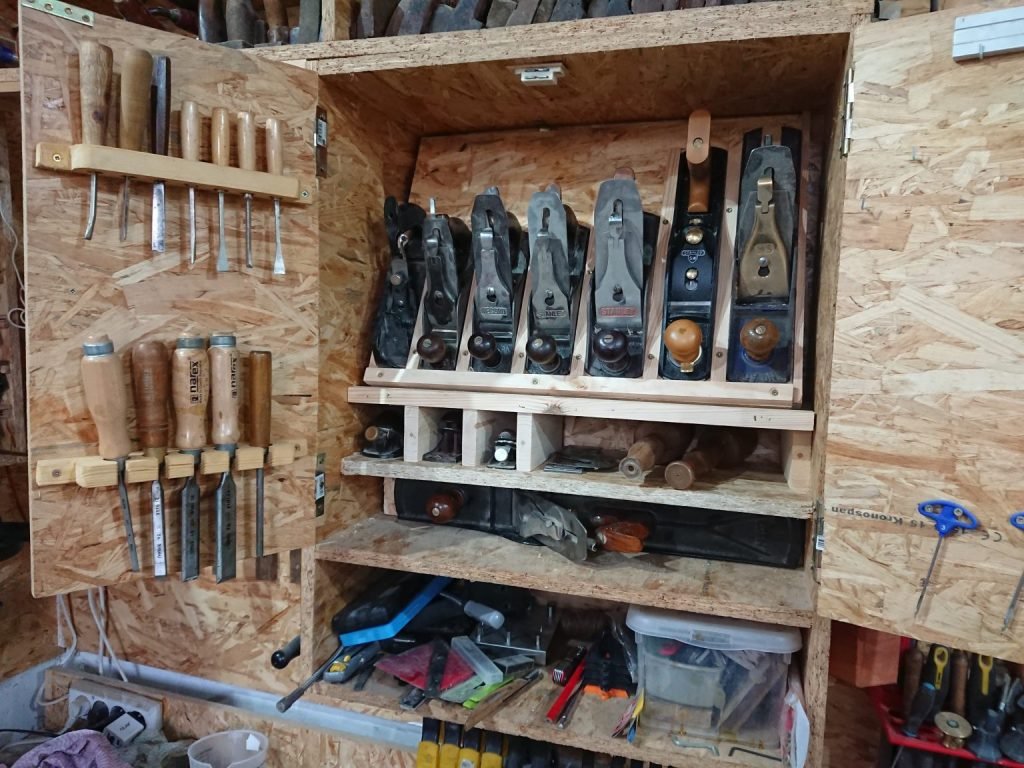
Most captions repeat the picture: “a cabinet of tools”. The reader can already see that. A useful caption names what they cannot see.
Describe, then delete
Write a plain description of the photograph. Then delete every word the picture already makes obvious. What remains is often nothing, and that is the point: now you know what needs adding.
Add place and time
The photograph at the top of this guide shows an open cabinet of woodworking tools. It does not show whose cabinet it is, where it stands or when it was photographed. Those are exactly the facts a caption should add, and your field notes should already hold them.
Add the one thing that matters
What would a reader miss? Perhaps that every tool had just been sharpened, or that one space in the cabinet is always empty. One clause is enough.
Read it aloud
If the caption sounds like a label on a museum drawer, it is probably working. If it sounds like a greeting card, cut it back. Never add a fact you did not record.