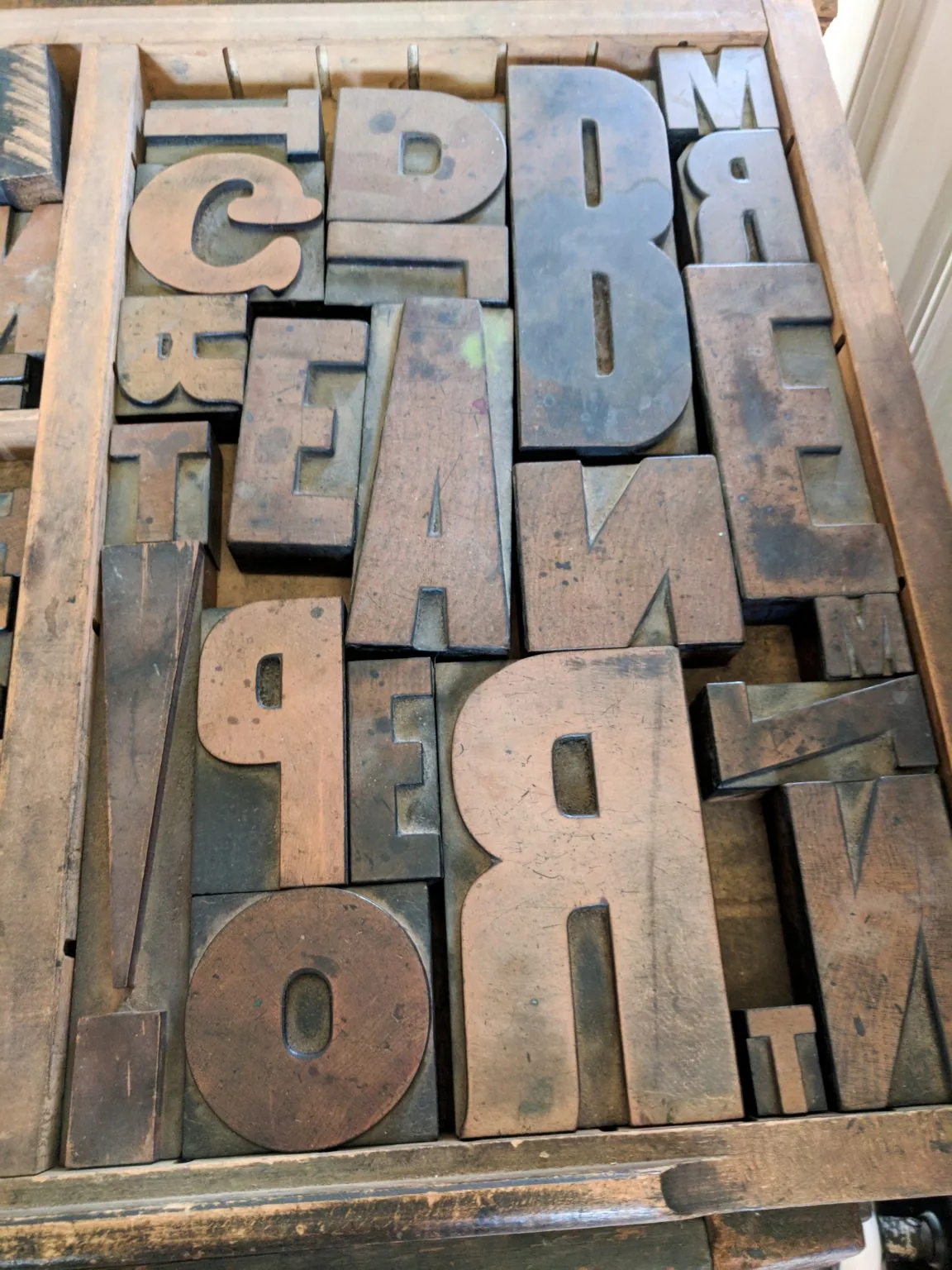
A sheet of close studies of the materials of print: the letters, points, blocks and pigments that make a mark before any design exists.
Each study is short. It names one object, looks at how it behaves, and ends with a swatch row, a type sample or a photograph that someone else could pick up and use.
| Practice | Studies in print, drawing and colour |
|---|---|
| Materials | Wood type, carved blocks, pencils, watercolour |
| Output | Square sheets, one study each |
| Enquiries | hello@example.com |
Specimen · Instrument Serif 400
Worn edges, soft ink
Headline · Instrument Serif italic
Worn edges, soft ink
Text · Jost 400, 18 / 1.6
Worn edges, soft ink. A letter that has printed for years loses its corners first, and the counters fill a little with each pass.
Method
01
Look at the tool
Every study begins with the object that makes the mark: a letter, a point, a block, a pan of colour.
02
Make one test
A single print, line or stroke on plain paper shows more than a page of notes about it.
03
Name what you see
Colours get names and values, faces get sizes, surfaces get a word. Vague notes are rewritten.
04
Keep the colophon
Each sheet records its materials and faces, so the next study can start where this one stopped.
About this sample sheet
The studies here are fictional sample content for the Pinkline theme. Photographs are CC0 from the WordPress Photo Directory, by MelissaH, Bigul Malayi, Orianna Radomile, onikart, Nilo Velez and appealdahal. Replace this note with your own colophon.